Ecommerce fulfilment cost in the UK is not a fixed figure: it is the total of several separate charges, typically storage, pick and pack, packaging, labelling, postage and returns, and it changes with your order volume, product size, weight and how you sell. That is why two brands using the same 3PL can pay very different amounts. In this guide we break down each cost, explain what pushes your price up or down, and share practical ways to keep your fulfilment bill under control.
What is included in ecommerce fulfilment costs?
Ecommerce fulfilment costs usually cover everything that happens to your stock from the moment it arrives at the warehouse to the moment it reaches your customer. Most 3PLs price each stage separately so you only pay for what you use.
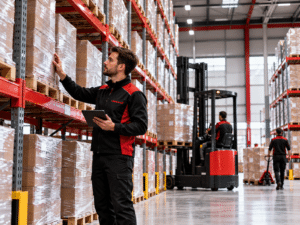
- Receiving and inbound handling: unloading deliveries, including pallets or full containers, and checking stock in.
- Storage: the space your products take up, often charged by pallet, shelf or bin.
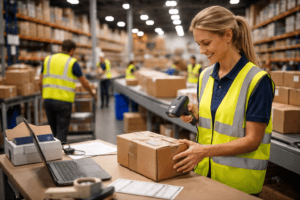
- Pick and pack: picking items from the shelf and packing them for each order.
- Packaging: boxes, mailers, void fill and any branded materials.
- Labelling and barcodes: preparing products and parcels so they can be tracked and accepted by marketplaces.
- Postage: the courier or delivery service used to get the parcel to your customer.
- Returns and inspection: receiving returned items, checking them and restocking where possible.
At EFCL we handle all of these in one place, which you can see on our ecommerce fulfilment pricing page.
How does storage affect your 3PL price?
Storage costs depend on how much space your stock occupies and for how long. Bulky or slow-moving products cost more to store because they tie up space for longer.
Pallet storage is often the most cost-effective option for larger quantities, while smaller items may suit shelf storage. If you are holding more stock than you sell, storage can quietly become one of your biggest costs. Our guide to pallet storage solutions for small businesses explains how to choose the right setup, and you can compare options on our pallet storage pricing page.
Why does pick and pack cost vary between orders?
Pick and pack costs vary because some orders take more time and handling than others. A single small item is quick to pick and pack; an order with several products, fragile items or special instructions takes longer.
Factors that influence pick and pack charges include:
- The number of items or SKUs in each order
- Whether products need extra protection or careful handling
- Kitting, bundling or inserting leaflets and gifts
- Custom or branded packaging requirements
Find out more about how we keep this fast and accurate on our pick and pack service page.
How do product size and weight change your fulfilment cost?
Size and weight affect almost every part of your fulfilment cost, especially postage. Larger, heavier parcels cost more to ship and usually need more packaging and storage space.
Couriers often price by both weight and dimensions, so a light but bulky parcel can cost more than you expect. Choosing packaging that fits your products snugly is one of the simplest ways to reduce shipping costs.
Does order volume affect the price you pay?
Yes, order volume is one of the biggest factors in your 3PL price. Higher, steadier volumes generally allow a fulfilment partner to plan staffing and space more efficiently, which can make each order cheaper to process.
If you are just starting out, do not let low volumes put you off. EFCL offers a New Startup Business Package designed for new brands that want professional fulfilment from day one.
Do sales channels and integrations affect cost?
Your sales channels can affect cost because each platform has its own requirements for labelling, packaging and dispatch. Selling on Amazon, for example, may involve specific prep and labelling rules.
EFCL fulfils orders for Amazon, Shopify, eBay, Etsy, WooCommerce and TikTok Shop. Connecting your store through our e-commerce integrations means orders flow straight to the warehouse, cutting manual work and the risk of costly mistakes.
What other costs should you plan for?
Beyond day-to-day fulfilment, there are a few extra costs worth budgeting for, depending on how you source and sell.
- Container handling: unloading and processing stock that arrives by container.
- Freight and customs clearance: moving goods into the UK and getting them through customs.
- Returns: processing, inspecting and restocking returned items.
- Customer support: handling delivery queries and customer contact.
Bringing these together with one provider often makes costs easier to track than juggling several suppliers.
How can you reduce your ecommerce fulfilment cost in the UK?
You can reduce your fulfilment cost by cutting wasted space, wasted time and wasted packaging. Small changes add up across hundreds or thousands of orders.
- Keep stock levels lean: avoid paying to store products that rarely sell.
- Right-size your packaging: smaller, lighter parcels cost less to post.
- Share accurate data: give your 3PL your typical order profile so they can quote precisely.
- Automate orders: use integrations instead of manual uploads.
- Reduce returns: clear product descriptions and secure packing help prevent avoidable returns.
- Bundle services: using one partner for storage, fulfilment and postage can simplify billing.
Is outsourcing fulfilment cheaper than doing it yourself?
For many growing brands, outsourcing fulfilment works out more cost-effective than running it in-house once you count staff, space, packaging and courier costs. It also frees up your time to focus on sales and marketing.
The right answer depends on your volumes and products. Our article on in-house vs outsourced pick and pack sets out the pros and cons to help you decide.
Frequently asked questions
How much does ecommerce fulfilment cost in the UK?
Ecommerce fulfilment cost in the UK varies by business because it is made up of storage, pick and pack, packaging, labelling, postage and returns charges. Your total depends on order volume, product size and weight, items per order and storage needs, so a tailored quote gives the most accurate figure.
What is the biggest factor in 3PL pricing?
Order volume, product size and weight are usually the biggest factors in 3PL pricing. They affect storage space, handling time and postage, which together make up most of your fulfilment bill.
Is pallet storage cheaper than shelf storage?
Pallet storage is often more cost-effective for larger quantities of stock, while shelf storage can suit smaller, faster-moving items. The best option depends on your product size and how quickly it sells.
Can a small business afford a 3PL?
Yes, many small businesses use a 3PL to avoid the cost of their own warehouse and staff. EFCL offers a New Startup Business Package specifically for new brands.
How do I get an accurate fulfilment quote?
Share your monthly order volume, product sizes and weights, average items per order, storage needs and sales channels with your 3PL. EFCL can then prepare a quote based on your actual order profile.
Want to know exactly what fulfilment would cost for your business? Tell us about your products, order volumes and sales channels, and the EFCL team in Manchester will put together a tailored price. Get your fulfilment quote today.